
Vinyl Liners for Inground Pools: A Pool Owner’s Guide
Thinking about adding in a vinyl liner pool to your backyard? Or do you already have a pool with a liner that has seen better days? Here’s a clear guide to vinyl liners for inground pools, how to care for them, and what sets high-quality options apart.
What Are Inground Vinyl Pool Liners Made Of?
Inground vinyl pool liners are engineered from PVC vinyl sheets that combine base resin with plasticizers for flexibility, stabilizers for UV resistance, and mildewcides to discourage microbial growth. At Kayden, we make vinyl pool liners from 100% North American virgin vinyl, not recycled blends. Virgin material delivers predictable flexibility, better long-term performance, and a cleaner, more uniform look. The result is a waterproof membrane that shapes to your pool’s walls and floor, forming a smooth, attractive surface. In addition, premium liners are heat-welded at the seams using controlled pressure and temperature so panels bond consistently. Thickness is measured in mil (thousandths of an inch). Many residential pools use 20-mil or 27-mil vinyl; both are durable, while thicker material offers extra abrasion resistance in high-traffic zones.
Why Thickness and Fit Matter
Material thickness only tells part of the story. Proper fit determines how a liner performs through the season. A liner cut from accurate measurements will sit tight against coves, steps, and transitions with fewer wrinkles and less movement underfoot. Precision cutting also reduces stress points around corners. When the pattern and geometry match the shell, you get the clean look people want and fewer callbacks at opening.
Style Options: Patterns, Borders, and Textures
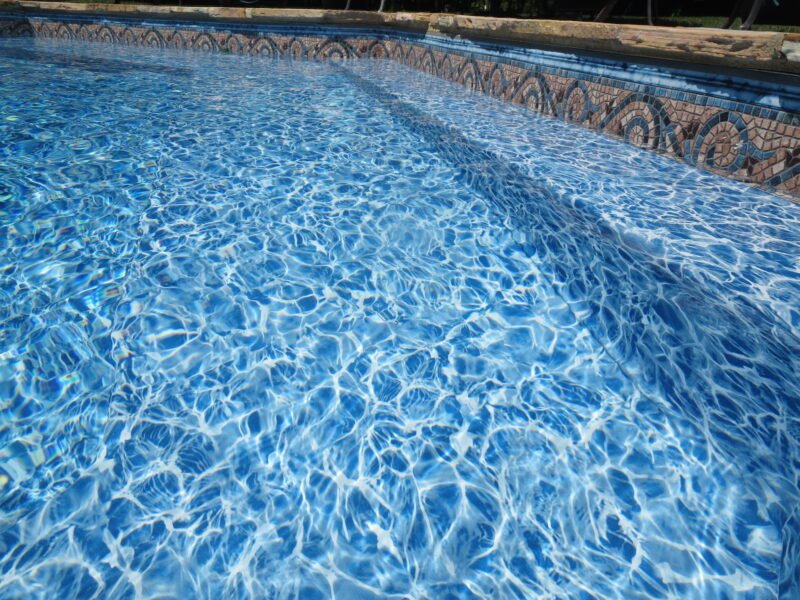
Vinyl pool liners come in a broad range of patterns, ranging from stone and tile motifs to modern, low-contrast prints that play well with contemporary decking. Pattern clarity, colorfast inks, and UV protection all contribute to how the liner will look in year two, three, and beyond. If you’re after a specific water color (aqua, deep blue, or a lagoon vibe), ask your dealer to show water-in-pool photos in addition to dry samples so you can pick with confidence.
The Care Routine That Pays Off
Balanced water is the single best habit for long liner life. Test weekly during swim season and after heavy use or storms. Targets for vinyl owners to follow:
- pH: 7.2–7.8
- Total alkalinity: 80–120 ppm
- Free chlorine: follow your sanitizer’s recommended range (stay steady, avoid roller-coaster dosing)
- Calcium hardness: 150–250 ppm for vinyl pools
- Cyanuric acid (stabilizer): maintain a moderate level per your sanitizer type
A few hard rules: never place chlorine tablets in the skimmer or directly on the liner; pre-dissolve shocks and disperse around the pool; and keep metals and phosphates in check if they’re an issue in your region. Consistent chemistry helps color and print stay sharp and prevents wear from water imbalances.
Day-to-Day Care Tips for Vinyl Pool Liners
- Brush and vacuum: Use a soft-bristle brush and a vinyl-safe vacuum head. Hard wheels or sharp edges can scuff.
- Mind sunscreen and oils: Rinse the waterline regularly so lotions don’t build up and dull the finish.
- Protect from punctures: Pet claws, sharp toys, and metal furniture near the edge can damage vinyl. Keep the play gear pool-friendly.
- Keep water level up: Low water puts extra strain on the liner.
- Leaf control: Organic debris left to sit can stain. Skim early, skim often.
Cold-Weather Performance and Covers
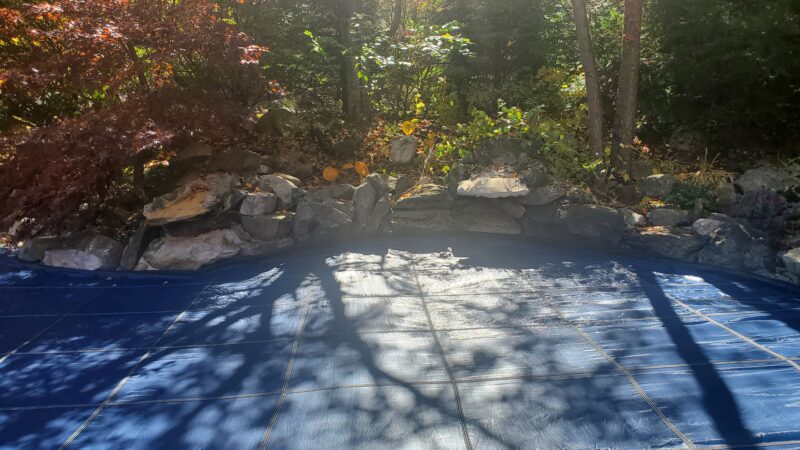
As temperatures drop, vinyl stiffens slightly, which is normal for the material. A properly fitted pool safety cover keeps leaves and other debris off the surface in the off-season, protects from UV exposure, and makes spring opening faster. When closing, bring chemistry into range, use winter products recommended for vinyl, and avoid draining below the level your installer specifies.
Pool Liner Replacement: Signs It’s Time
Knowing when to plan pool liner replacement avoids surprise downtime mid-season. Watch for:
- Fading or pattern loss that indicates long UV exposure
- Persistent wrinkles that don’t respond to careful repositioning
- Small cracks or brittleness near fittings
- Repeated leak hunts or patch jobs
- A stretched liner
Your pool professional can pressure-test, inspect the base, and confirm if you’re better off replacing now or if you’ll get another season.
Why the Dealer Relationship Matters
A skilled, local pool pro measures correctly, uses quality materials, advises on pattern choices, recommends thickness for your pool’s layout and your lifestyle, and installs with care. You get guidance on opening/closing, chemistry, and accessories that protect your investment, along with service after the sale. That ongoing relationship is the difference between a liner that just looks good on day one and one that keeps its shape and color for seasons to come.
Ready for a Liner You’ll Love Next Season, Too?
At Kayden Manufacturing, we design and make inground vinyl pool liners with precision fit, durable materials, and patterns that homeowners request most. To explore options or to be connected with a local authorized Kayden dealer who can quote, measure, and install a quality Kayden liner, connect with us.
More Helpful Content for You

10 Simple Pool Liner Cleaning/Care Tips to Keep Pool Liners Clean
A pool liner can last anywhere from five to 20…

6 Benefits of Being a Kayden Dealer
In the world of pool building and renovation, the products…
8 Surprising Facts About Vinyl Pool Liners
Vinyl pool liners are one of the most popular choices…